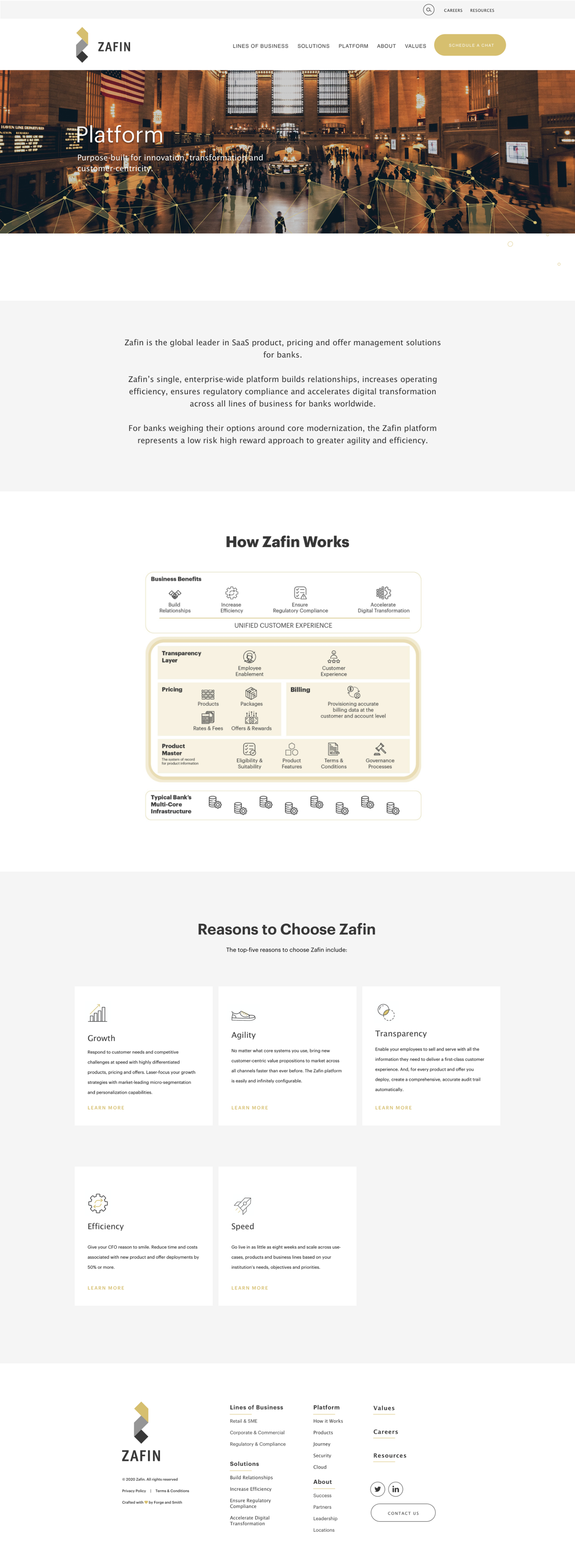
Zafin Website Redesign
Delivering a simplified user journey to meet business development goals, sales assistance, and brand consistency.
Project Overview
Digital Transformation & Market Positioning
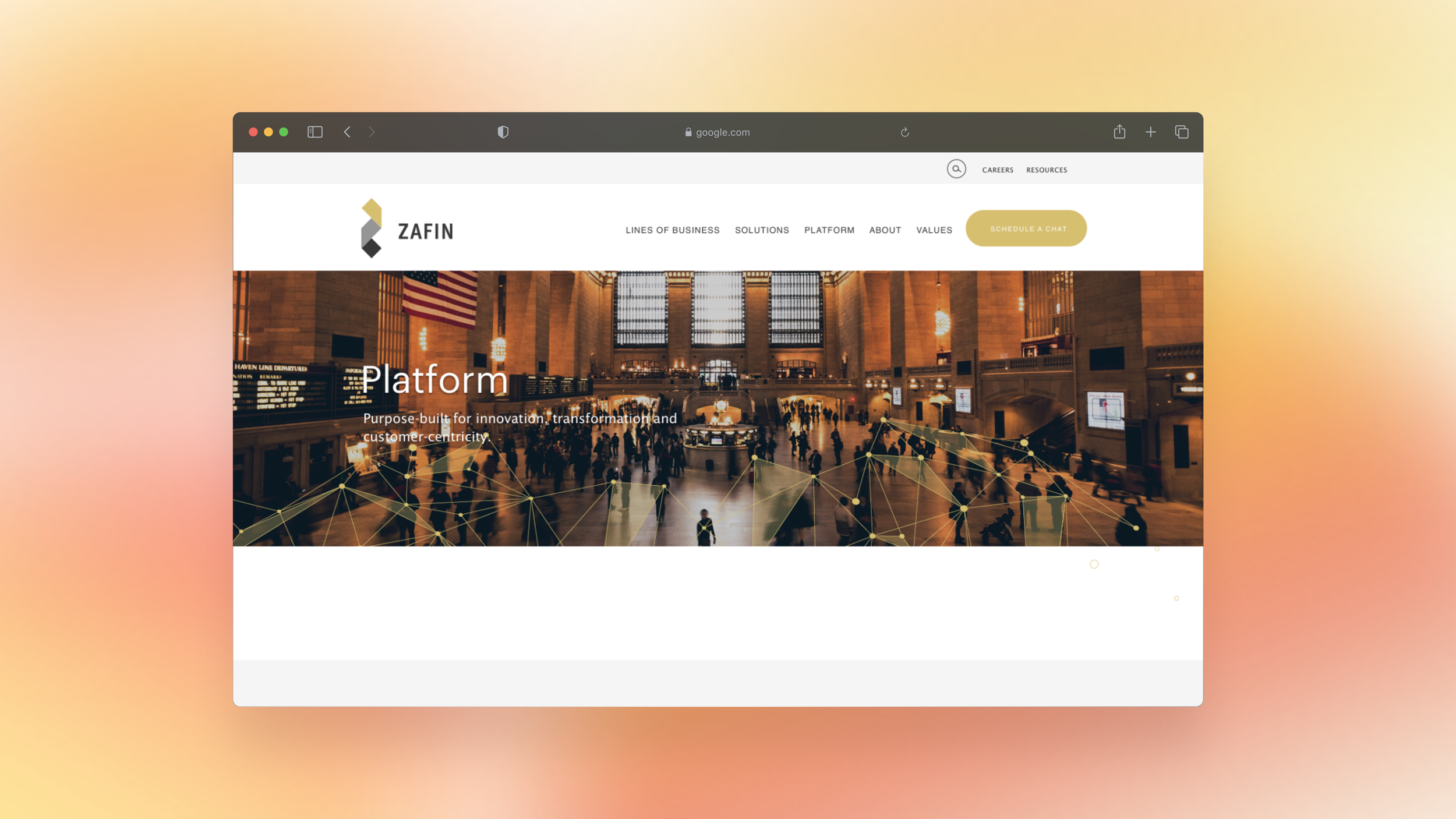
Zafin, a leader in enterprise SaaS for Tier-1 banking, required a digital flagship that matched its $1B+ market valuation. The legacy site suffered from fragmented user journeys and a "sophistication gap" that hindered the sales cycle.
This project was a comprehensive strategic overhaul. By implementing a component-based design system and a value-centric information architecture, we transformed a static marketing site into a high-performance conversion engine. The result was a unified brand identity that reduced cognitive load for C-suite decision-makers and accelerated the enterprise buyer journey.
My Role
Design Lead & Strategic Orchestrator
As the Project Design Lead, I steered the design vision and managed stakeholder alignment across the executive suite. My focus was on bridging the gap between complex product capabilities and high-level business value to secure C-suite buy-in and project momentum.
Core Responsibilities & Strategic Contributions:
Executive Strategy & Buy-in: Communicated high-level design strategy to C-suite stakeholders, leveraging interactive prototypes and wireframe mockups to demonstrate how design decisions directly supported Zafin’s global expansion and US market entry.
Strategic Discovery: Defined project focus areas by conducting deep-dive secondary research, competitive benchmarking, and heuristic audits. This identified the "credibility gaps" in the legacy experience and turned them into opportunities for market differentiation.
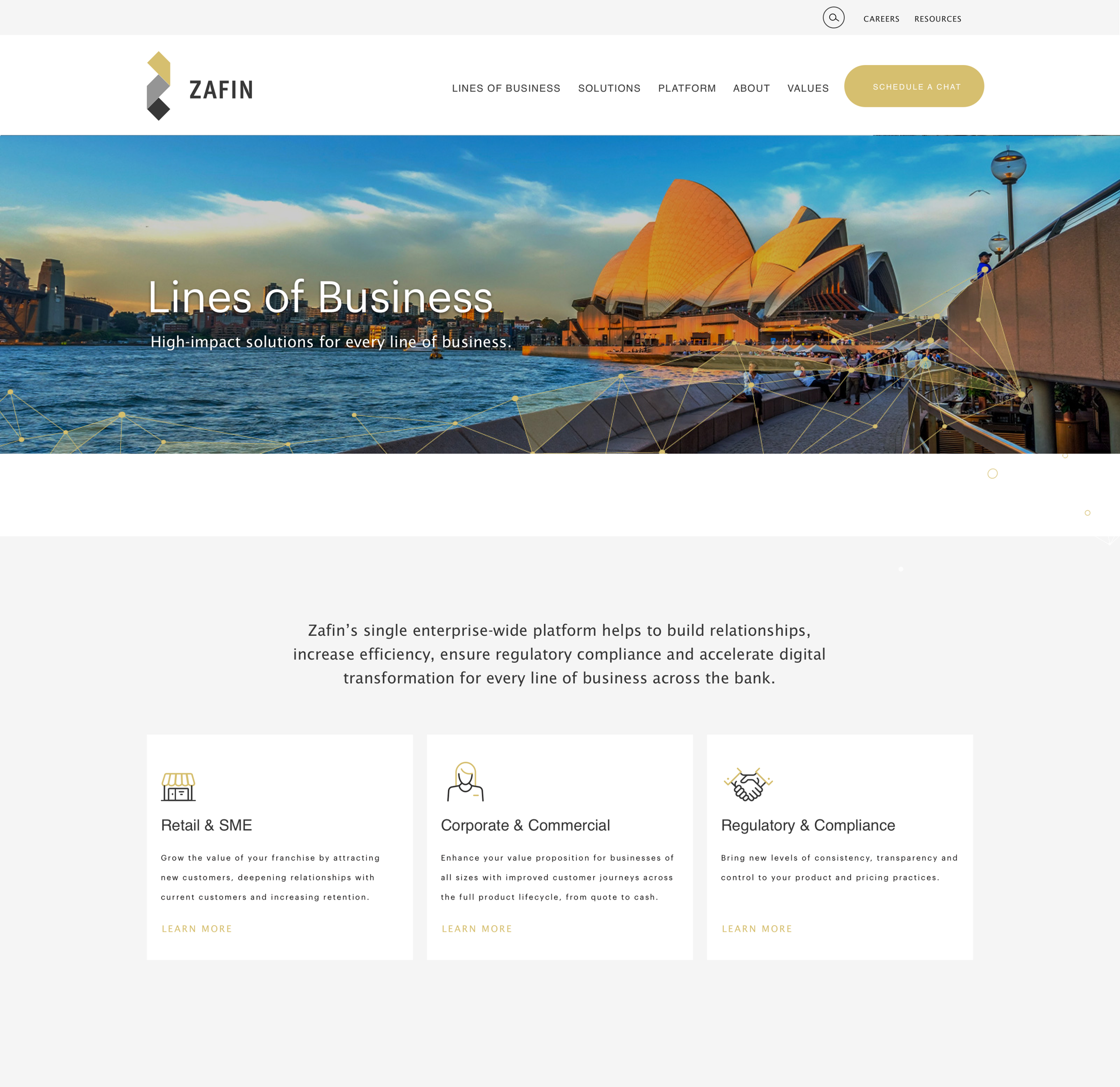
Architecture & Conversion Engineering: Redesigned the global information architecture from the ground up. By eliminating fragmented "dead ends," I created a streamlined flow that maps user intent to actionable business outcomes and high-conversion pathways.
Systems Governance & QA: Spearheaded the creation of a scalable, component-based design system to ensure long-term brand integrity. I managed the end-to-end quality lifecycle—including functional QA and pre/post-launch audits—to guarantee a flawless enterprise-grade experience.
01. The Problem: Friction in the Enterprise Journey
The legacy site suffered from "information sprawl." Product capabilities were siloed, forcing potential C-suite buyers to hunt for value. This fragmentation resulted in high drop-off rates and a lack of visual cohesion across the brand’s global touchpoints.
The Goal: Redefine the brand identity and information architecture (IA) to align with the sophisticated mental models of banking executives while accelerating the path to conversion.
02. The Solution: A Scalable, Component-Based Ecosystem
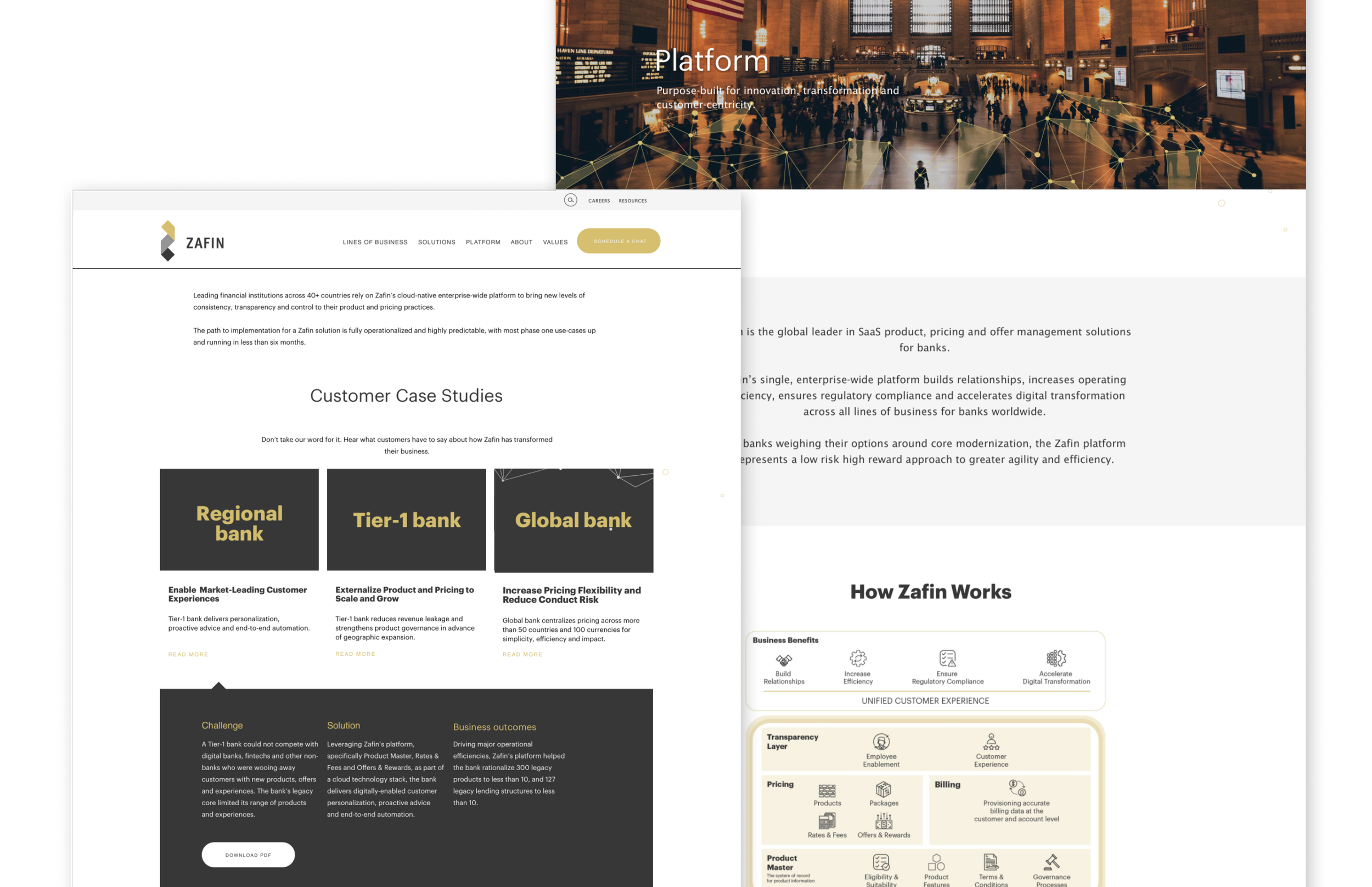
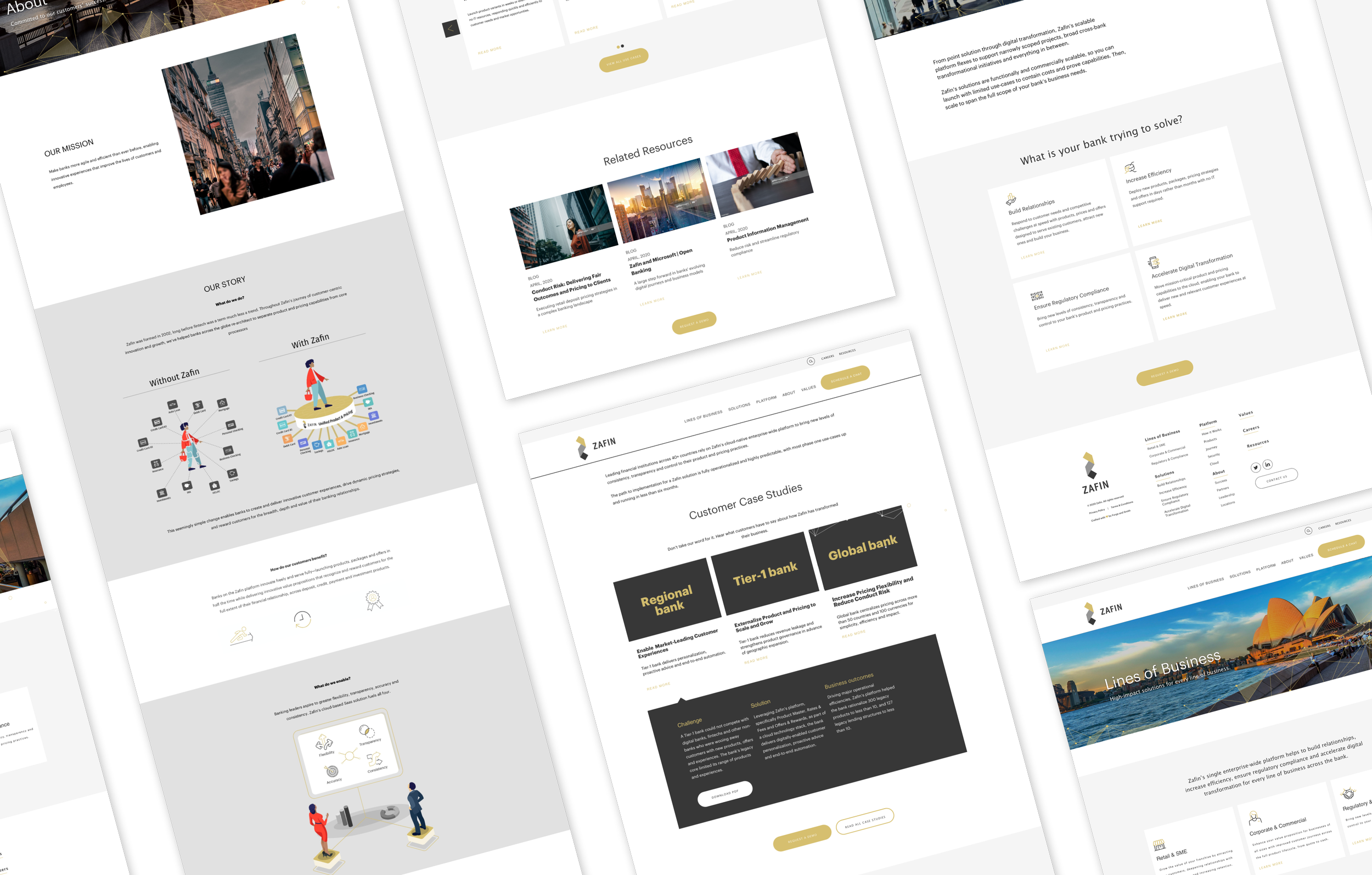
I moved away from page-by-page design in favor of a centralized design system. By implementing a scalable, component-based framework, I ensured that every touchpoint—from the homepage to deep-funnel whitepapers—remained visually and strategically aligned.
Architecting the System: I developed a library of modular UI components (e.g., dynamic "Trust Bars," interactive solution tiles, and social proof modules). This didn't just improve aesthetics; it provided the marketing team with a "Lego kit" for rapid iteration.
Operational Impact: This systemic approach reduced design-to-development handoff cycles by 40%, allowing the business to pivot messaging and launch campaign landing pages with unprecedented speed.
03. Strategic IA: Rewiring for High-Conversion Pathways
With the design system as the foundation, I redesigned the site’s Information Architecture to transform fragmented user journeys into high-conversion pathways.
The "Intent-Match" Framework: I restructured the navigation to map directly to specific buyer stages—shifting from "what we do" to "how we solve."
Conversion Engineering: By streamlining the IA, I reduced the cognitive load required for users to find relevant case studies and product specs. I replaced dead-end pages with clear, high-intent CTA pathways (e.g., "Request a Demo" or "Talk to an Expert").
04. Results & Strategic Impact
This redesign was a fundamental shift in how Zafin communicates its value proposition to the market.
Brand Authority: Unified the brand identity to reflect Zafin’s status as a Tier-1 fintech partner, creating a seamless "Stage 0" experience for the sales team.
Funnel Velocity: By removing navigational friction and implementing a cohesive design language, the site saw a significant uptick in engagement on high-value conversion points.
Future-Proofing: The component-based system ensures that as Zafin scales its product suite, the digital ecosystem can expand without compromising brand integrity or user experience.