
Redesigning Legacy Debt for Scalable Personalization

Project Overview
I led the redesign of a 10-year-old legacy filtering system that had become a bottleneck for enterprise scale. By moving to a rules-based orchestration model, we reduced hub creation time by 80% and reclaimed 40% of engineering bandwidth previously lost to technical debt.
Role
Lead UX Designer
Responsibilities:
Design system audit
Create and contribute components to a new design system
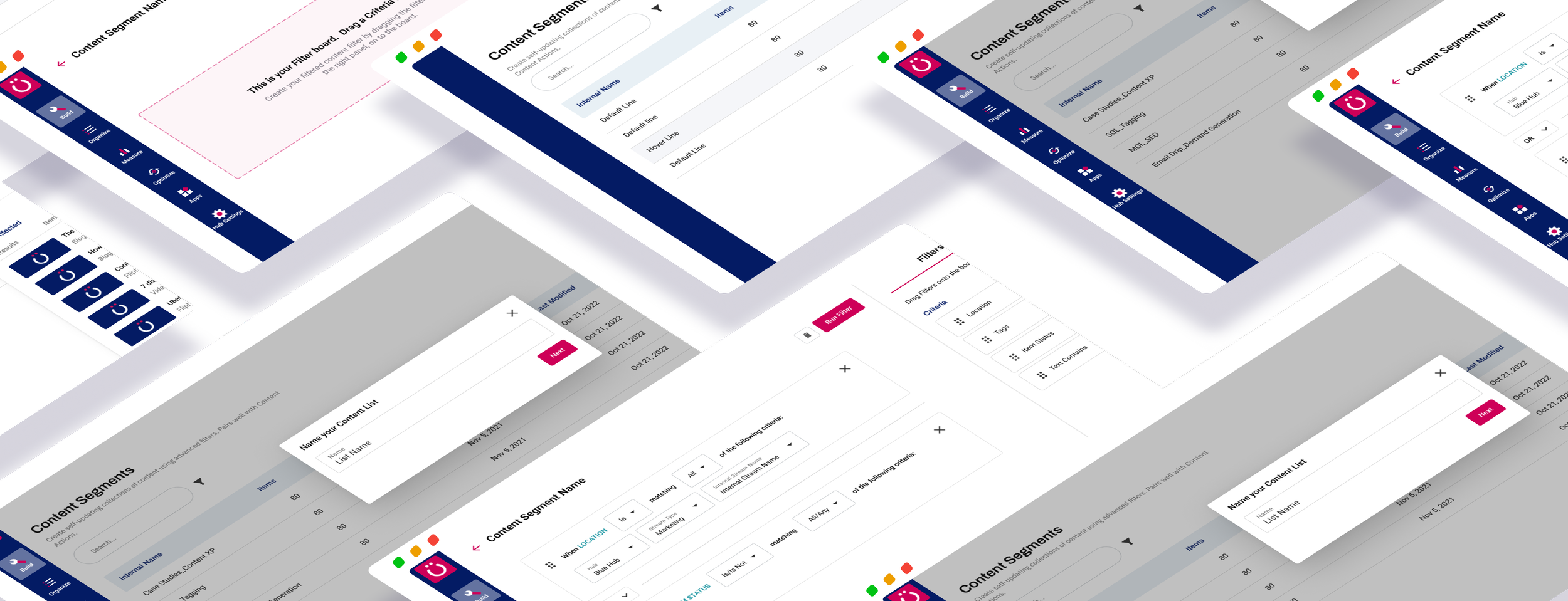
Defined the interaction model for rules-based orchestration
Scope
3 months
Team
1 pm, 2 designers, 4 devs
The Challenge
Uberflip’s core value proposition—the ability to deliver personalized content at scale—was facing a strategic bottleneck due to its own legacy architecture. While the market demanded faster, dynamic personalization, the legacy feature "Smart Filters" had become a personalization bottleneck that impacted users, business growth, and operational health.
User impactThe Trust Gap
A lack of system transparency turned the filtering process into a "black box." To regain control, marketers migrated to manual shadow systems (Excel), doubling their workload and increasing the risk of manual errors and platform distrust.
Business impactThe Scalability Ceiling
The static legacy engine could not ingest modern data sources (such as Google Analytics or AI capabilities). This created a strategic roadmap blocker, stalling the automation roadmap and threatening our competitive edge in enterprise personalization.
Operational impactHigh-Stakes Technical Debt
As one of the platform’s oldest features, the code was too brittle for safe iteration. This resulted in disproportionate operational overhead, where engineering and support teams were consumed by legacy "firefighting" rather than high-value innovation.
The “Dark Content Trap” Problem
Uberflips platform utilizes the marketer’s content repository to create personalized content hubs for multiple target segments. (Same asset used in 5 different ways in 5 different places). However, content was being developed but never seen again. Because the filtering was brittle, it was easier for a marketer to request new content than to find old content.
The Result: Massive "Content Waste" and a library that grew in size but decreased in utility.
Problem Statement:
How might we deconstruct a brittle, legacy filtering system to Empower marketers to go from searching and sorting their repository to Orchestrating and defining rules that can automate the flow of content?
Solution Strategy
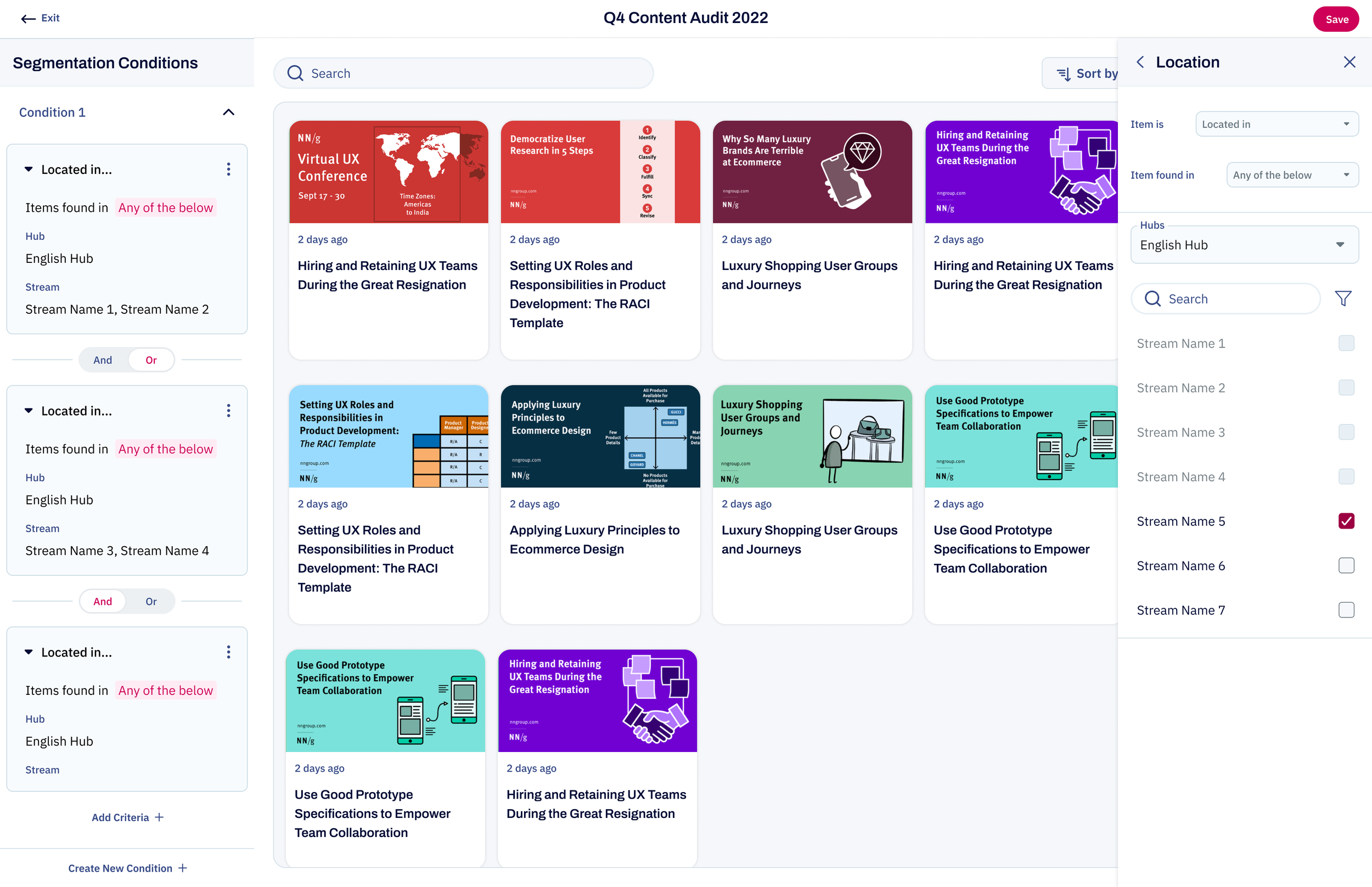
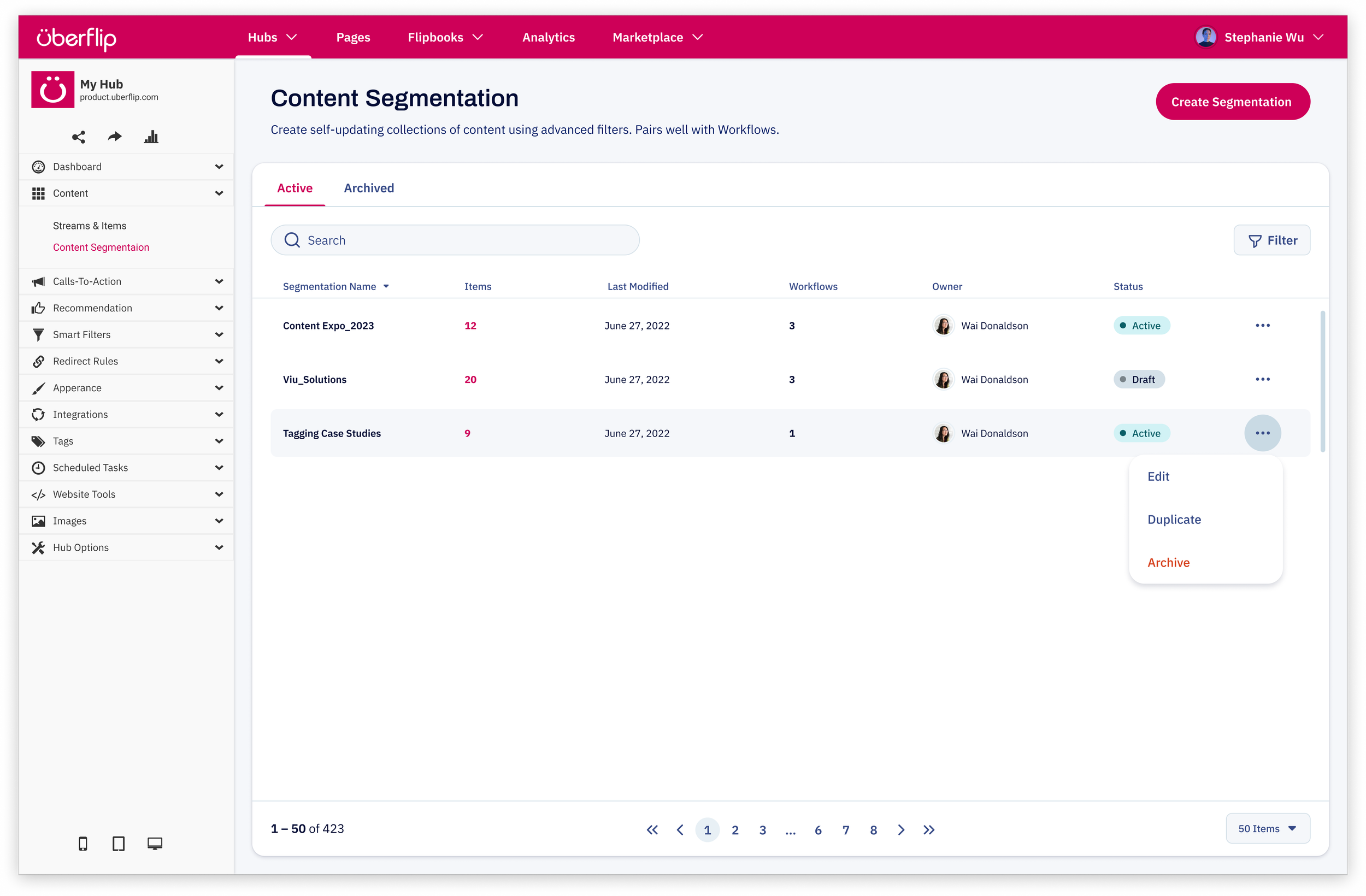
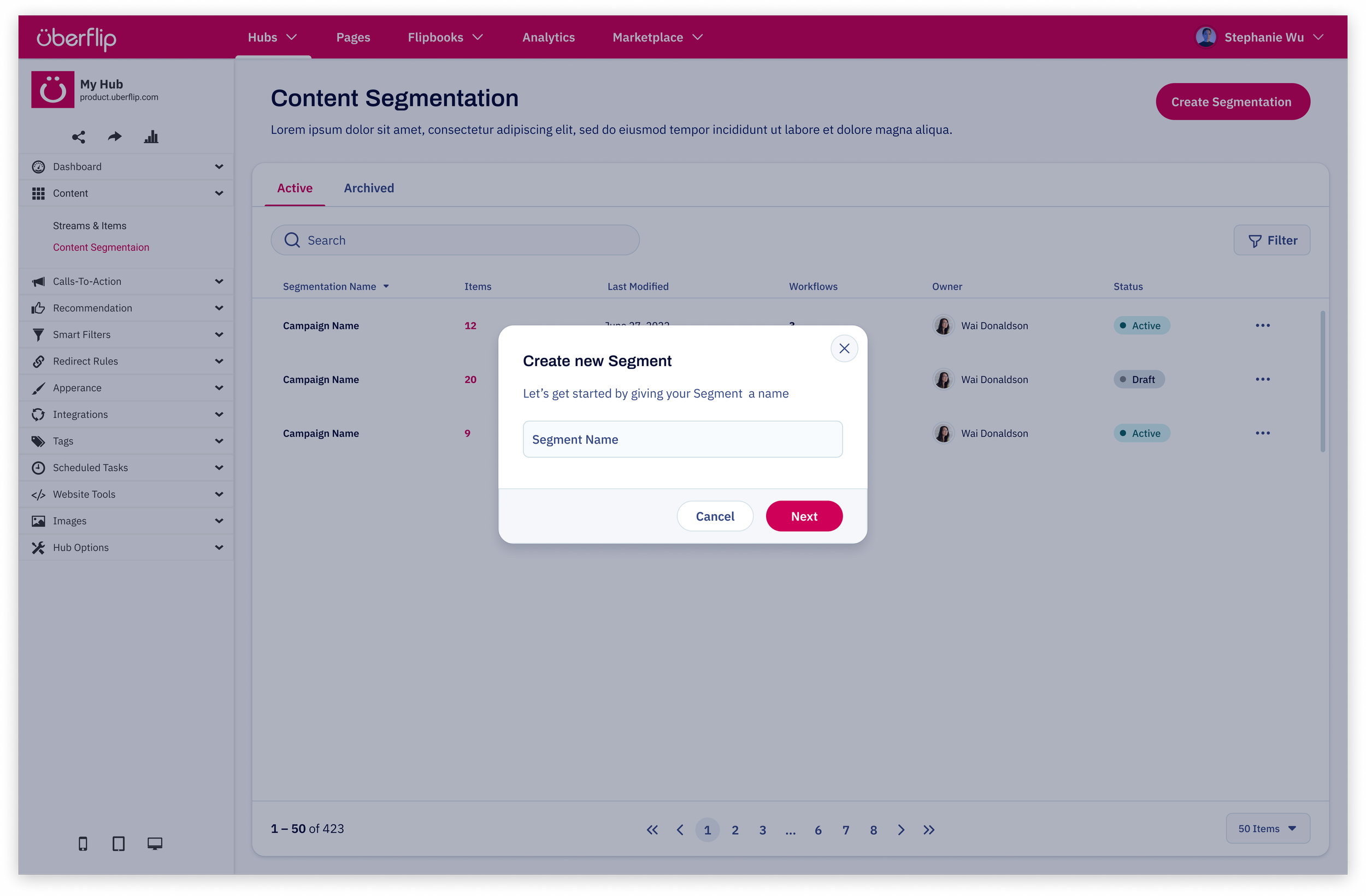
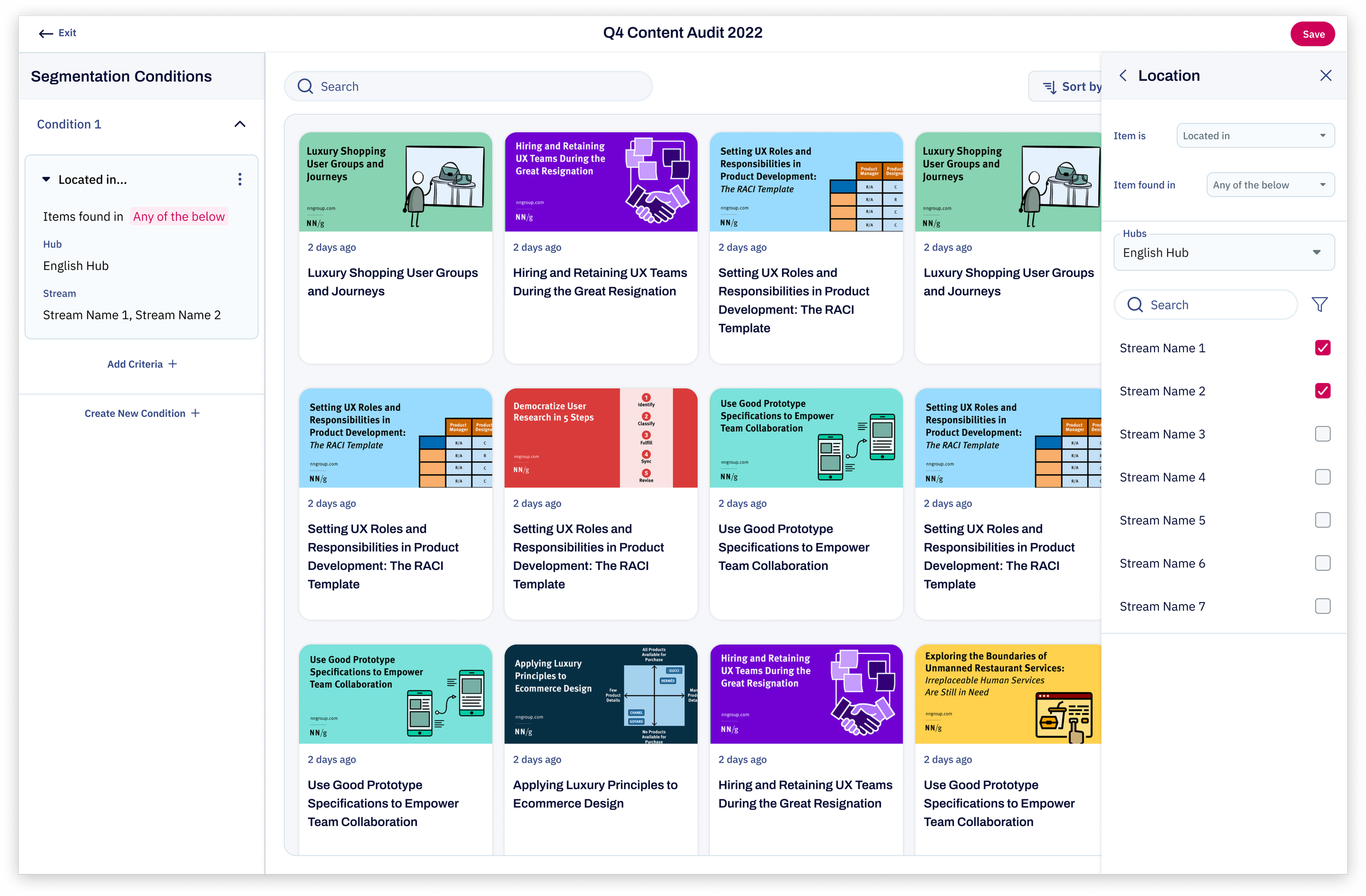
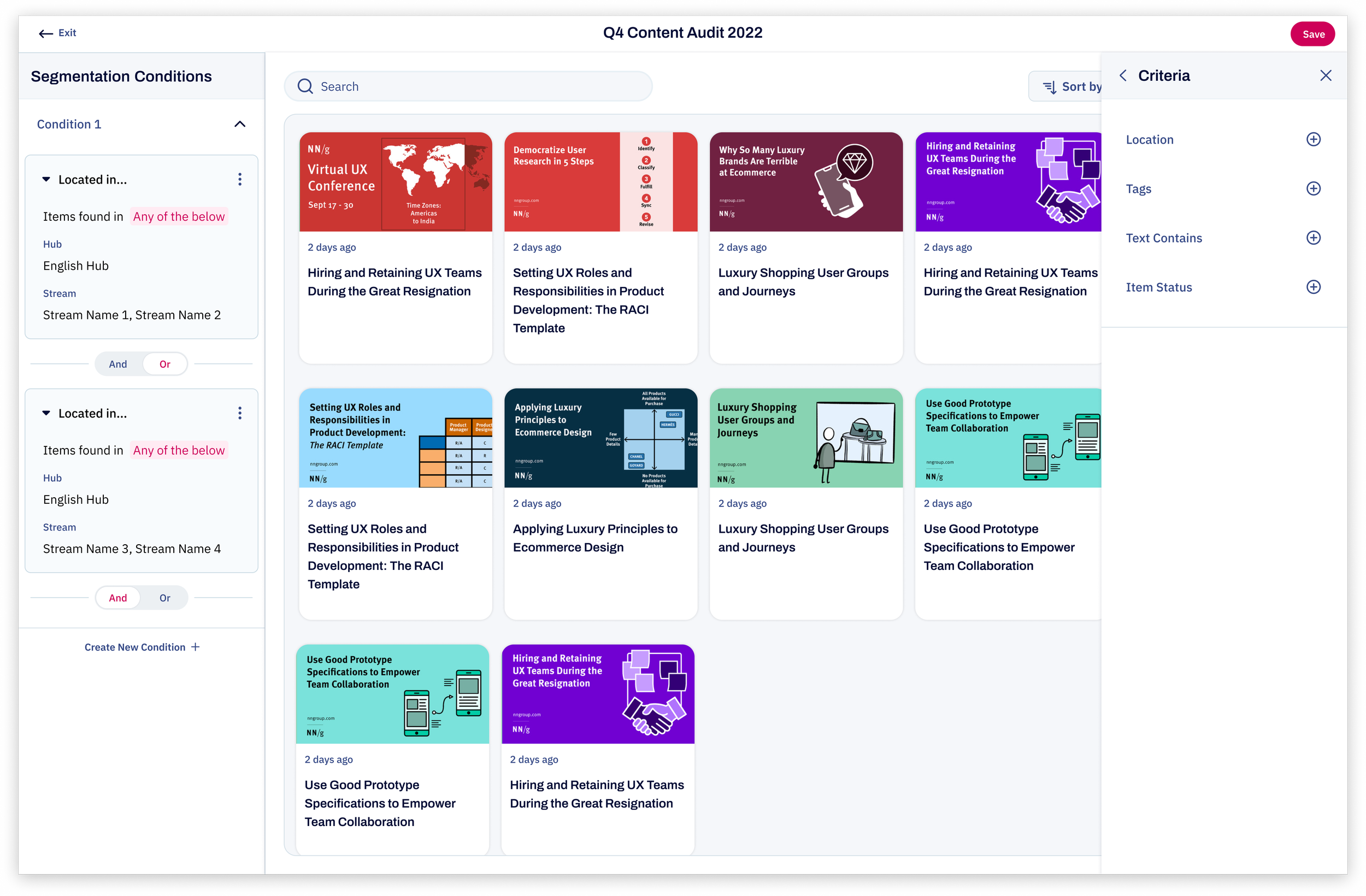
We deconstructed the brittle filtering UI and replaced it with a Dynamic Rules Engine.
Key design pillars included:
Content Transparency: Integrated real-time previews so marketers could see the "result" of a rule before publishing, eliminating the "Black Box" effect.
Architectural Scalability: Redesigned the interaction model to support current and future data ingestion (AI/ML) without requiring a UI overhaul.
Design System Pilot: Leveraged this high-stakes redesign to battle-test and contribute 12+ core components to our emerging enterprise design system.
Final Solution
Key Outcomes
Reduced average hub creation time by 80%
(from hours of manual tagging to < 15 minutes of rule-setting).
50% increase in asset reuse
Effectively "resurrecting" legacy content that had been hidden for 6+ months.
39% reduction in monthly support tickets
allowing the team to pivot from reactive firefighting to proactive feature development.
Design System Adoption
Every component designed for this project was successfully integrated into the primary design system and has since been adopted by two other product squads.